Twin BC commissioner reports okay use of telematic data

On August 28th, the British Columbia OIPC affirmed two elevator companies’ (Kone’s and Thyssenkrup’s) use of telematic data for the purpose of managing their service employees.

The outcome is not surprising. The Commissioner herself affirmed another elevator company’s fleet management program in a thoroughly-reasoned decision last December. Also, all Canadian decisions (by privacy regulators and arbitrators) have recognized the legitimacy of such programs (which rest on the collection of location data and vehicle operation data). Kone’s program was unique in that it collected data from cellar telephones (rather than vehicle units). The OIPC held that Kone’s program collected more sensitive personal information but was nonetheless reasonable.

The decisions are notable for the OIPC’s conclusion that an organization in BC does not need a stand alone GPS or Telematics policy to comply with the notice and “policies and practices” requirements in BC PIPA. It held that Kone complied with its obligation by giving a detailed PowerPoint presentation that outlined the specific purposes for which it would use employee personal information in advance of implementing its program. Thyssenkrup breached its obligations; it had difficulty establishing that it had a formal communication program that addressed the purposes of its program in any detail.

Order P13-01(28 August 2013).

Order P13-02 (28 August 2013).

Intrusive mobile application class action certified in Québec

On June 27, the Superior Court of Québec certified a class action about the alleged intrusive nature of free applications offered through Apple’s “App Store.”

The petitioner alleges that Apple breached various Québec statutes by failing to inform users that free applications would facilitate the collection and use of their personal information, including their “geolocation.” The petitioner also claims that individuals were harmed (a) by the loss of computing resources and (b) by being led to overpay for their Apple devices, such devices being “inextricably linked” to undesirable characteristics associated with free applications distributed through the App Store. The petitioner asked the Court to grant certification so he could prosecute Apple on on behalf of all residents in Canada who downloaded free applications from December 1, 2008 to present.

Apple attacked the action’s suitability for certification on a number of bases. Most fundamentally, it complained that the action provided for an “infinite variety of classes” – for example (and at the least), classes of individuals who were exposed to applications with different information-gathering characteristics. Nonetheless, the Court granted certification of a Québec only class. Its analysis is very forgiving, especially in addressing Apple’s (very valid) concerns about the individualized nature of a consent dispute, which the Court dismissed as follows:

In the Court’s view, all of the Respondents’ arguments regarding the consent or lack thereof, the voluntary provision of information by Class Members and other similar elements that distinguish Class Members between them can be raised by them in their defence or alternatively when dealing with the « lien de causalité ».

Hat tip to BLG and its privacy law blog for this post.

Albilia c Apple Inc, 2013 QCCS 2805 (CanLII).

The duty to document government decisions, deliberation in private and quality decision-making

In this week’s Information and Privacy Commissioner/Ontario report on the deletion of e-mails by the Ontario government, the IPC decries a “verbal culture” in government and recommends a government “duty to document.” What might this duty entail? Is deliberating about difficult decisions through verbal dialogue really objectionable?

This is not the first time this duty to document has been proposed. In March of this year the British Columbia Office of the Information & Privacy Commissioner also endorsed a duty to document. The BC report includes a good history of efforts made to advance the duty in Canada, efforts that date back to 1994 in the BC Commissioner’s account. The BC Commissioner also notes a federal private member’s bill – Bill C-301 – that features a duty to document.

There are two variants of the duty that we should distinguish from each other – one that requires documentation of “actions, decision and reasons” and another that extends to “advice” and “deliberations.”

The BC Commissioner endorses the narrower version. In 2009, former BC Commissioner DavidLoukidelis argued for a duty to document “actions and decisions and reasons therefor” in a submission to the federal Standing Committee on Access to Information, Privacy and Ethics. The March report from BC contains the same recommendation:

I would reiterate that this requirement need not be an onerous one. The duty to record actions, decisions and reasons are not merely a question of creating records for the purposes of openness and accountability, but also go to good governance, the state of information management and information holdings of government.

Bill C-301 features the broader version. Here’s the language:

2.1 Every officer and employee of a government institution shall create such records as are reasonably necessary to document their decisions, actions, advice, recommendations and deliberations under this Act.

The recent IPC report is ambiguous, and unfortunately, suggests that the BC Commissioner has embraced a duty to document deliberations:

Commissioner Denham notes [in her March report] that a number of Information Commissioners have called for the creation of a legislated duty for institutions to document matters related to deliberations, actions and decisions. Commissioner Denham stated:

Among the reasons for instituting a legislated duty to document include good governance, historical legacy of government decisions, and the protection of privacy and access to information rights. Without a legislated duty to document, government can effectively avoid public scrutiny of the rationale for its actions.

She goes on to note that the legislated duty to document is a critical element of the open government movement and an important element of proactive disclosure.

The underlined statement above is correct but misleading; the BC Commissioner did note that others have endorsed a duty to record deliberations but did not do so herself.

The distinction between the broader and narrower versions of the duty to document is one that should become part of the public dialogue, especially because a duty to record deliberations runs against advice that counsel (including this counsel) regularly give public sector institutions; do not think aloud over e-mail.

Deliberating via e-mail (or text message) is a terrible decision-making practice that has only been invited recently by changes in communication technology. The dialogue invited by such a practice will either be too stilted to be effective or too dangerous because every creative, bona fide and ultimately un-pursued idea will be available in the end to undermine a final decision.

Yes, meetings represent a more private decision-making venue, but that is why they support good decision making. Public sector officials should record the actions flowing from meetings along with all decisions made and their rationale. This is, agreed, a matter of good governance. They should also be given the continued ability to discuss matters in confidence.

Whether a duty to document should encompass “advice” also deserves debate. It may not be objectionable if it is decipherable from a duty to document deliberations. Notably, the degree to which the exemption for “advice and recommendations” under our freedom of information legislation protects the deliberative aspects of decision-making will be addressed in an important Supreme Court of Canada case to be heard this November. The Ontario Commissioner will be joined by four other commissioners in arguing for a narrow interpretation of the exemption so that recorded deliberations will be more accessible to the public. If they succeed, public officials will face greater pressure to engage in verbal dialogue. They should not be castigated for craving a zone of privacy.

Information Roundup – Volume 2013, Edition #4

Here is list of good links recent information and privacy developments:

I’ve been posting less than I’d like to lately have a BIG pile of cases to catch up on. My apologies. I’ve been training very hard and getting ready for an event that I’ve always dreamed of doing and have finally committed to.The “M2O” is a 32 mile paddle race from Molokai to Oahu across the Ka’iwi Channel – the “channel of bones.” I’ll do it solo on a prone paddle board (paddling with my hands). The distance is not so bad, but the channel conditions are going to make the race very hard. My only goals is to finish with my dignity.

I’ve spent the last four months building some base and learning from paddlers in the community. At this point I’m extremely excited and feeling fit and positive, but the hard work is just starting. Forgive me for posting a bit about my progress here. I love the writing about the developing law, but the developing law is going to be competing for my attention for the next while!

Aloha,

Dan

551328_10152774761550525_753524037_n

Information Roundup – Volume 2013, Edition #3

Lots of good information and privacy content flowing through my Twitter network lately. Here are the highlights:

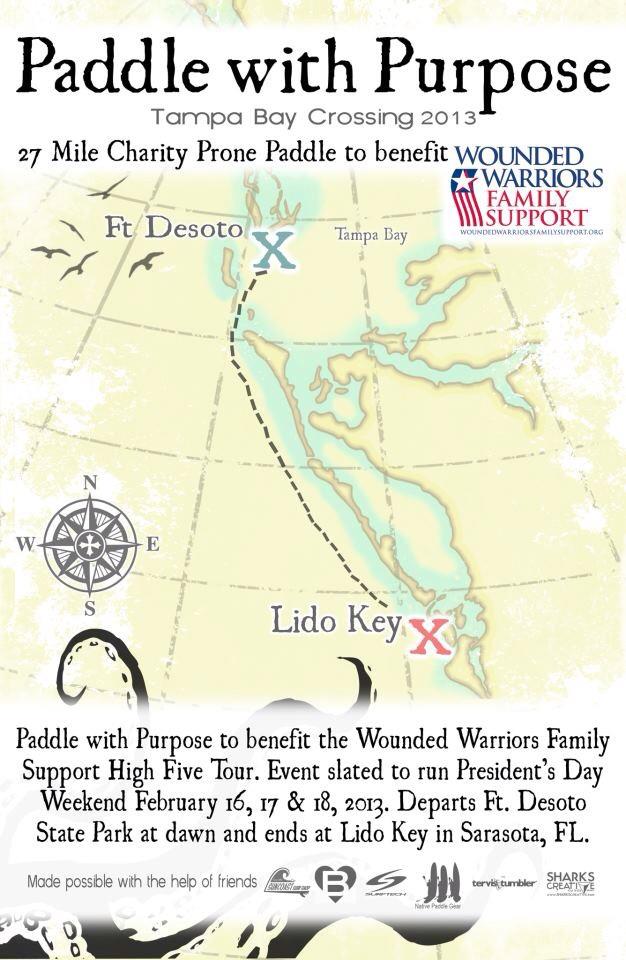
It’s getting very near the end of winter paddling season. The highlight was the Paddle With Purpose event from a couple weekends back. A group of us paddled 27 miles from St. Petersbug to Lido Key for Wounded Warriors Family Support. We paddled with the spirit of aloha, which you can FEEL in watching the beautiful video below. I’ve swung an invite to do another crazy paddle next weekend in California with some of same characters. I’m very excited. Story to be told later.

Information Roundup – Volume 2013, Edition #2

I’ve managed a few blog posts lately but haven’t been so active on Twitter. Here, however, is what is worth a re-post:

Thanks to all those who shared these good links.

In two weeks I’ll be flying down to Tampa to paddle 27 miles with a good group of other prone paddlers from the area and across North America. The energy is building around the event, but it’s going to be hard. If you’re a regular reader of this blog please consider donating to the charity for whom we will paddle – the Wounded Warriors Family Support organization, an organization that provides support to the families of American soldiers wounded, injured or killed in battle. Or, if you’d rather, please consider making a donation to an alternative Canadian charity here.

566148_10200339847282501_1710139173_n

Information Roundup – Volume 2013, Edition #1

The “Information Roundup” is back!

This is something I’ve run in the past that features a compilation of tweets plus a personal note of some kind. I’m going to bring it back because I’ve started tweeting links to information and privacy decisions that don’t quite deserve a full post and want a good record of them somewhere. It will also be nice to add a little bit of colour back into the blog.

So here’s the first list for 2013, with a more to come as we go:

As for me, I’m quite obsessed by paddling (a prone paddleboard) right now and recorded this video just after Toronto had its big snowstorm this Christmas. It’s quite a beautiful thing to be on the Lake O at this time of year. Dark and moody but beautiful. I hope the video gives you an appreciation of the variety of experiences the Lake can offer and maybe an urge to get wet.

All About Information’s #Clawbies2012 Nominations

This year I nominate The Trial Warrior Blog by Antonin Pribetic and Morton’s Musings by James Morton. Blogs driven by genuine interest in the law are becoming more and more distinct as those with a more promotional bent are pouring in. I like both these blogs because they are pure in spirit. Bonus points to Pribetic for his honesty and feisty spirit and bonus points to Morton for contributing good, concise educational content.

I also nominate FMC’s Data Governance Blog, driven mostly by the efforts of Tim Banks. It competes most closely with the content from this blog, but is good.

Case nicely illustrates how duty of fidelity constrains negative expression in the workplace

On June 13th, Arbitrator Herlich issued an award in which he affirmed discipline meted to an employee who made various negative comments in the workplace but reduced the penalty because the discipline rested in part on an internal e-mail communication that was not culpable.

The employee worked at a convention centre. He was disciplined for expressing negative views on three occasions. Two occasions led to customer complaints. The third was in the workplace where clients were in attendance. The discipline also rested on an e-mail the employee sent to a senior executive that was critical of the employer (though not of any specific individuals). The employer felt the employee did not follow the proper procedure for raising a complaint.

Arbitrator Herlich said the following about the three occasions of negative expression in the workplace:

The grievor obviously has an extensive workplace and labour relations agenda. He is entitled to his views and he is entitled to engage in legitimate trade union activities, including, should he so choose, seeking trade union office and engaging in the politicking that may attend those efforts. That freedom, however, is not absolute and does not provide him with a license to freely express his views at work to, or within the earshot of, the employer’s customers or guests. The grievor clearly did not and, I fear, still does not understand this.

He felt that sending e-mail was different and, in the circumstances, not culpable. Based on this and a consideration of other factors, Arbitrator Herlich reduced the employer’s five day suspension to a three day suspension.

United Steelworkers and The Crown in Right of Ontario (Ottawa Convention Centre) (13 June 2012, Herlich).